
Tankless Toilet: Pros, Cons and What to Check Before You Buy
A tankless toilet has no tank behind the bowl. It is lower and sleeker, and it is easier to clean. Most smart toilets are built this way. Here is what changes when the tank goes away.
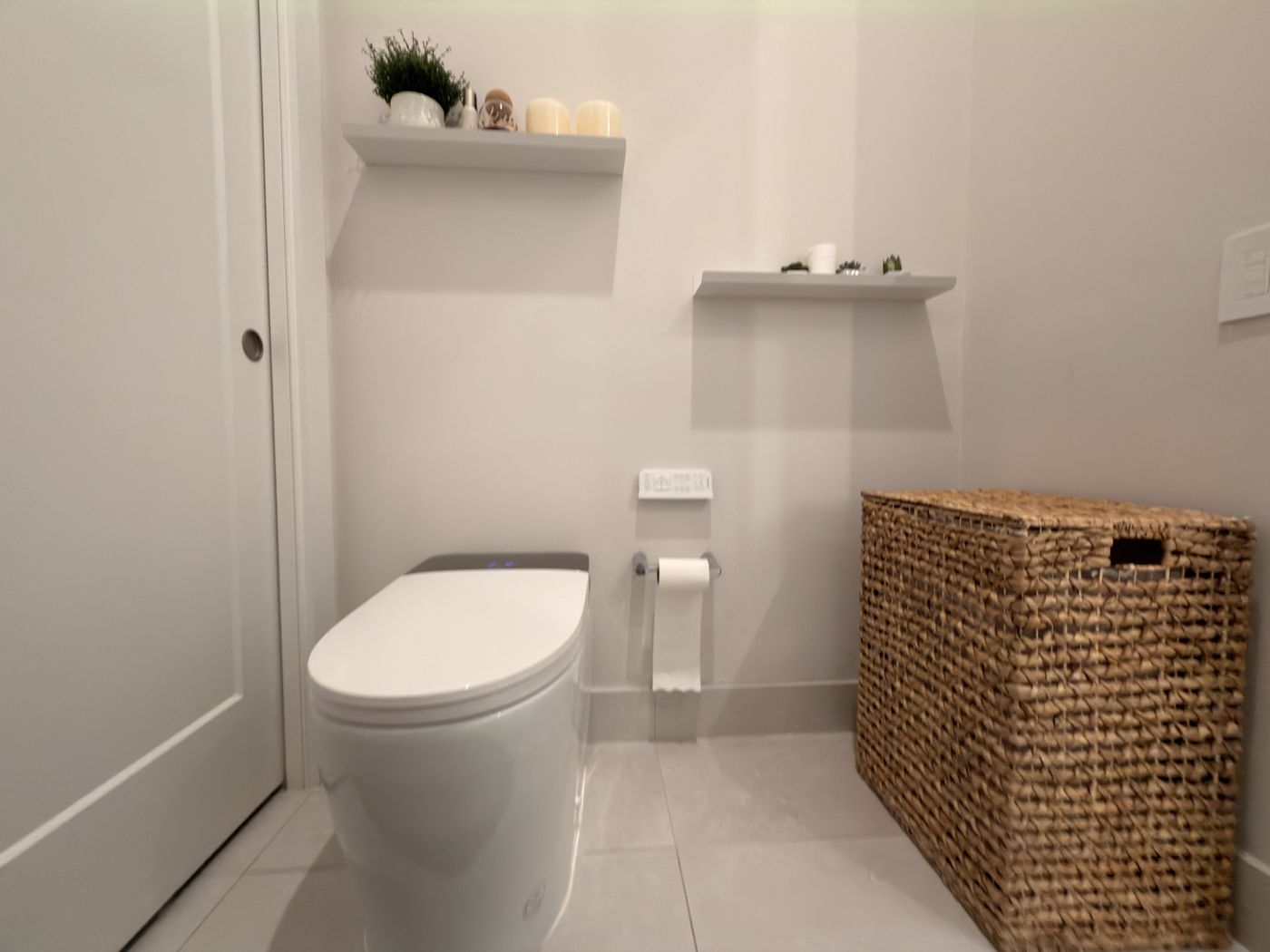
How does it flush without a tank?
A regular toilet stores water in the tank and dumps it into the bowl. A tankless toilet uses the water pressure from your supply line, often helped by a small electric pump, to push water into the bowl when you flush.
The pros
- A lower, more compact shape that makes small bathrooms look bigger.
- No tank to refill, so it is ready for the next flush right away.
- Fewer surfaces and gaps to clean.
- No tank parts like flappers and fill valves to wear out.
The cons, and how to handle them
- Most tankless smart toilets need an outlet. Every installed price we give includes a new GFCI outlet.
- Some need good water pressure. The DeerValley 0371 and 0289 are made to flush well even with low pressure.
- In a power outage the automatic flush stops, but every model in our catalog can still be flushed by hand.
Which tankless toilets do we install?
DeerValley sells the 0159, 0029, 0019, 0150 and 0160 smart toilets as tankless designs, from compact models about 27 inches long to larger ones with an automatic lid on the Premium level. All of them fit a standard 12-inch rough-in, and the 0029 and 0019 also come in a 10-inch version.
What it costs installed
Tankless smart toilets start at $1,450 installed in one day in South Florida, with delivery and a new GFCI outlet included.
See every tankless smart toilet with price →More guides
- How Much Does Smart Toilet Installation Cost in South Florida?
- Does a Smart Toilet Need a Special Outlet?
- 10-Inch vs 12-Inch Rough-In: How to Measure Before You Buy a Smart Toilet
- Smart Toilets for Kids: Auto Flush, Heated Seat and a Lid That Closes Itself
- Bidet Toilet, Bidet Seat or Smart Toilet: Which One Should You Get?
- Heated Toilet Seat: How It Works and What It Takes to Install